If you've ever wondered what is a sewer cleanout, you're not alone. It's a capped pipe providing direct access to your home's main sewer line, a plumber's best friend for clearing tough clogs.
You may have seen this mysterious capped pipe in your yard or basement without knowing its purpose, but it becomes critically important when you notice signs of a sewer issue.
This article explains everything you need to know about this vital access point, including where to find it and why it is so important for your home's plumbing health.
- What a Sewer Cleanout Looks Like (And What It's Not)
- Is It a Sewer Cleanout or a Septic Tank Lid?
- What Are the Other Pipes & Lids in Your Yard
- Where to Find Your Main Sewer Cleanout
- Check Outside (The Most Common Location)
- Check Inside (Common in Older Homes & Cold Climates)
- Still Can't Find It? It Might Be Buried
- Why Your Plumber Needs This Access Point
- Do I Need To Find the Sewer Cleanout As A Homeowner
- Can I Open the Sewer Cleanout Myself?
- Standard vs Popper Sewer Cleanout Cap
- What If My Older Home Doesn't Have a Cleanout?
- Find the Best Access to Clear Your Drains
- Frequently Asked Questions
- What is the difference between a sewer cleanout and a septic tank lid?
- How do I know if I have a clog in my main sewer line?
- Is it bad if there is standing water in my sewer cleanout?
- What happens if my house was built without a sewer cleanout?
- What is a two-way sewer cleanout?
What a Sewer Cleanout Looks Like (And What It's Not)
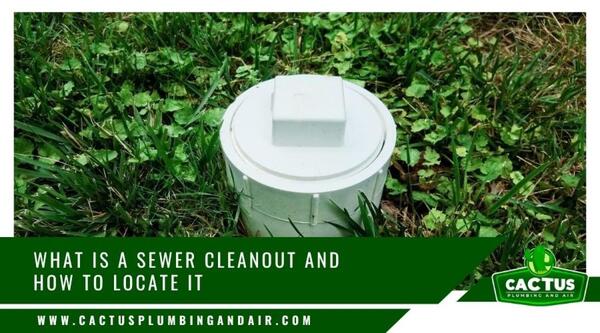
You can identify a sewer cleanout by its size, material, and cap.
-
Look for a pipe that is 3, 4, or 6 inches wide.
-
Most modern cleanouts are made of white or black ABS or PVC plastic.
-
Older homes might have a cast-iron pipe with a brass plug.
-
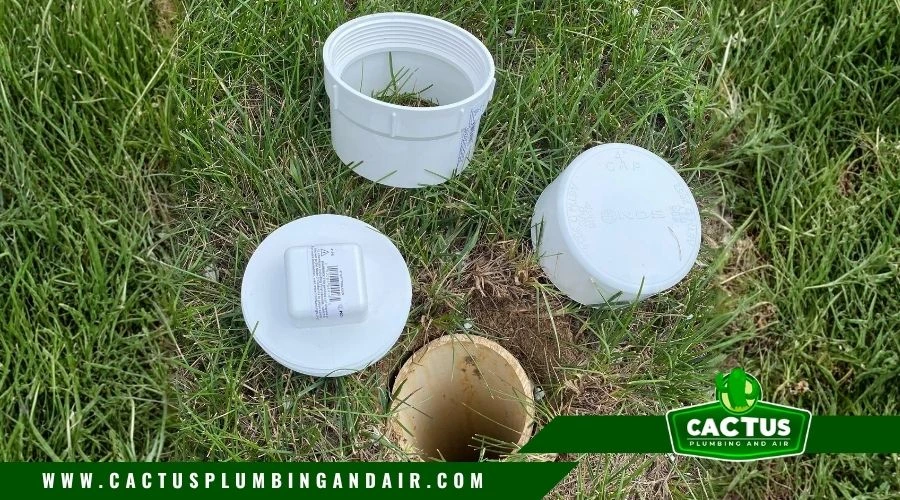
The cleanout is sealed with a threaded plug that has a square nut or groove on top for a wrench.
Is It a Sewer Cleanout or a Septic Tank Lid?
A sewer cleanout is a small pipe for clearing clogs, while a septic lid is a large cover for pumping the tank. It’s typically a 4- to 6-inch pipe that gives plumbers direct access to the sewer line.
A septic lid is much larger, often 18 to 24 inches wide, and is used to access the tank for pumping. Opening a septic lid will not help clear a clog in the sewer line.
What Are the Other Pipes & Lids in Your Yard
Your yard has other access points that can easily be confused with a sewer cleanout.
You might spot a water meter (metal lid labeled "Water"), a small gas line by your meter, or a green irrigation box in the lawn.
It is important to tell these apart. Trying to open the wrong access point, especially a gas line, is a serious hazard.
If you are not 100% certain you've found the sewer cleanout, do not touch it. This is a job for professionals who are trained to identify the correct pipe and handle the situation safely.
Where to Find Your Main Sewer Cleanout
You can find your sewer cleanout by checking specific locations outside or inside your home.
Check Outside (The Most Common Location)
Start by walking around your home's foundation, especially near bathrooms or the kitchen. If your home uses a city sewer, trace the path from your house toward the street.
The cleanout is often 3 to 10 feet from the foundation. You might find an "S" stamped on the curb, which marks the sewer line's path.
If you have a septic tank, the cleanout is usually found on the pipe that runs between the house and the tank.
Check Inside (Common in Older Homes & Cold Climates)
In homes with basements or crawlspaces, the cleanout is often on the floor or a low wall where the main sewer pipe exits the house. You should also check utility rooms and garages, as these are other common indoor locations.
Still Can't Find It? It Might Be Buried
Landscaping, mulch, or soil can easily hide a cleanout cap. While you can gently probe the ground in likely areas, it is best to call a professional. Plumbers have special line-locating tools to find the pipe without guesswork.
Once the cleanout is located, it provides the vital access your plumber needs to find and fix the problem.
Why Your Plumber Needs This Access Point
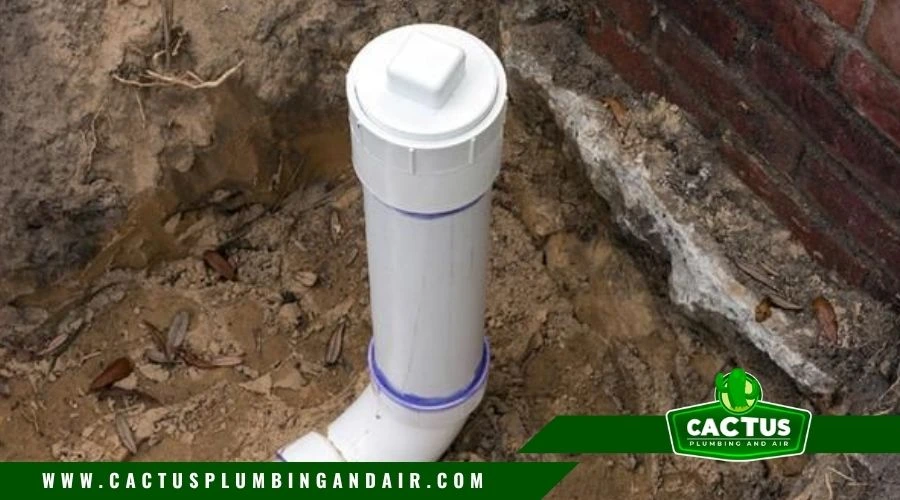
Think of the sewer cleanout as the "service entrance" to your main sewer line. It’s the only access point large enough for a plumber to safely use their heavy-duty equipment, like a big sewer snake or a hydro jetter.
Trying to clear a main line clog through a small sink drain just isn't going to work. If your home doesn't have a cleanout, the job gets a lot harder, messier, and riskier.
A plumber is stuck with bad options. They might have to completely pull a toilet off the floor just to get access.
This is a huge hassle and risks cracking the toilet or damaging your flooring. The other choice is climbing onto the roof to try and feed tools down a vent pipe.
This is obviously dangerous for the plumber and makes it much harder to actually reach and clear the clog. But as a homeowner, what should you know about this access point?
Do I Need To Find the Sewer Cleanout As A Homeowner
Your sewer cleanout is really a tool for plumbers. But as a homeowner, knowing a few key things about it can help you protect your home from a disaster.
Just remember: this is not a DIY home plumbing task, like unclogging a sink. When it comes to the main cleanout, you should always leave the work to a professional.
Can I Open the Sewer Cleanout Myself?
No, homeowners should not open the sewer cleanout. If your line is clogged, opening the cap can release a high-pressure flow of raw sewage, creating a serious hazard.
Older metal plugs can also be rusted shut and may break the pipe if you try to force them open.
Standard vs Popper Sewer Cleanout Cap
There are two main types of caps: a standard plug and a pressure-relief "popper" cap. A standard cap is a simple threaded plug that seals the pipe to keep sewer gas in. A relief "popper" cap is a special cap designed to "pop" off under pressure.
If your main line backs up, this cap lets the sewage spill into your yard instead of backing up into your shower or tub, saving you from an expensive indoor cleanup.
What If My Older Home Doesn't Have a Cleanout?
It is common for older homes not to have a sewer cleanout. This limits a plumber's options to pulling a toilet or using a roof vent.
A professional plumber can install a modern sewer cleanout, often in a single day. This upgrade saves time and money on any future drain service calls.
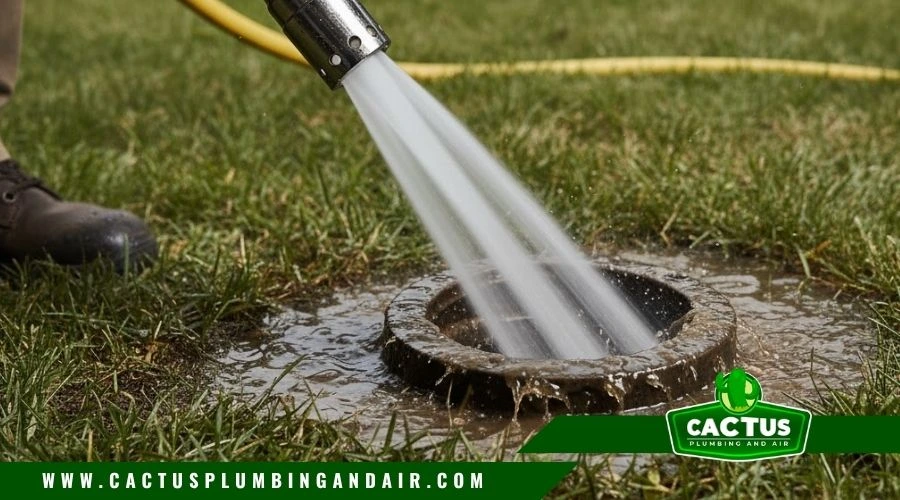
Find the Best Access to Clear Your Drains
The sewer cleanout is the key to fast, effective, and non-invasive drain cleaning. Whether your cleanout is easy to find, buried, or missing, our experts at Cactus Plumbing and Air have the right tools to solve the problem. Contact us today for expert drain cleaning in Chandler.
Frequently Asked Questions
What is the difference between a sewer cleanout and a septic tank lid?
A sewer cleanout is a small 4 to 6-inch pipe used to access the sewer line for clearing clogs. A septic tank lid is a large 18 to 24-inch cover used to access the tank for pumping.
How do I know if I have a clog in my main sewer line?
The most common sign of a main line clog is when multiple plumbing fixtures back up at the same time. For example, flushing a toilet might cause water to come up in your shower drain.
Is it bad if there is standing water in my sewer cleanout?
Yes, standing water in your cleanout pipe is a definite sign of a problem. It means there is a clog or blockage downstream, between the cleanout and the city sewer or septic tank.
What happens if my house was built without a sewer cleanout?
If your home has no cleanout, a plumber must use more difficult methods to clear a clog. This usually involves pulling a toilet off the floor or accessing a plumbing vent on your roof.
What is a two-way sewer cleanout?
A two-way sewer cleanout is a U-shaped fitting that provides two vertical access pipes. This design allows a plumber to run cleaning equipment both downstream (toward the street) and upstream (back toward the house) from one location.
Recent Posts
-

How to Unclog a Bathroom Sink
Nov 23, 2025